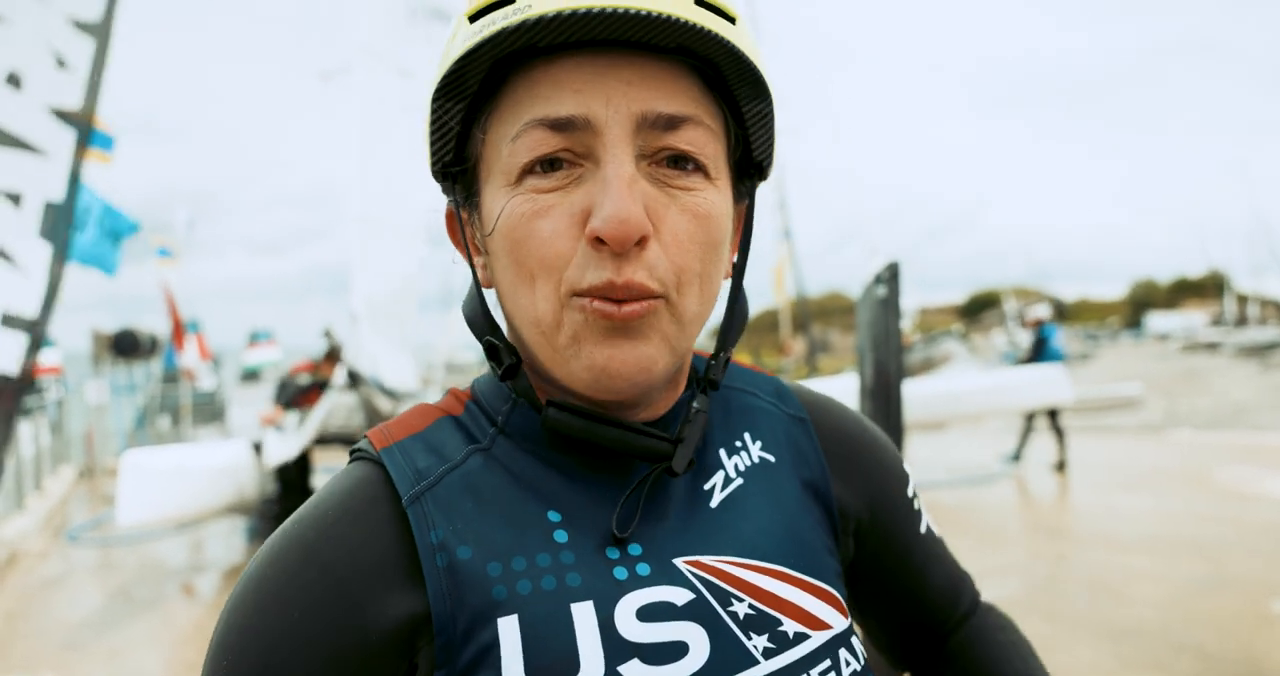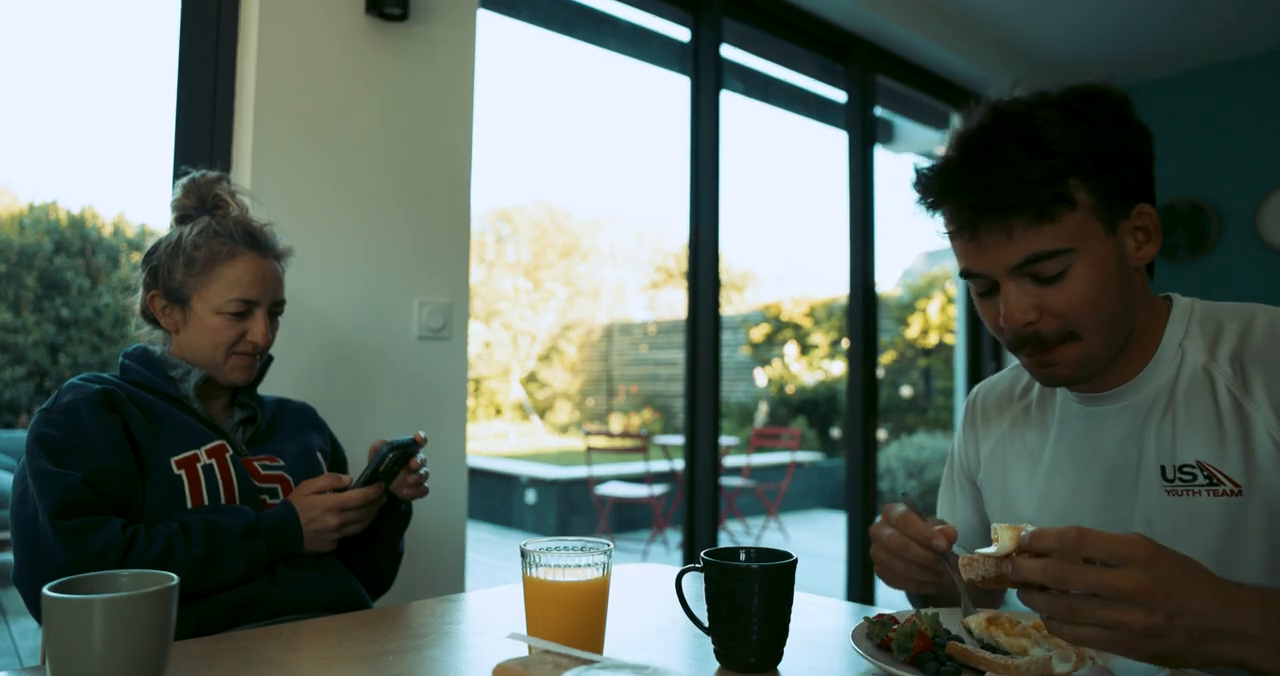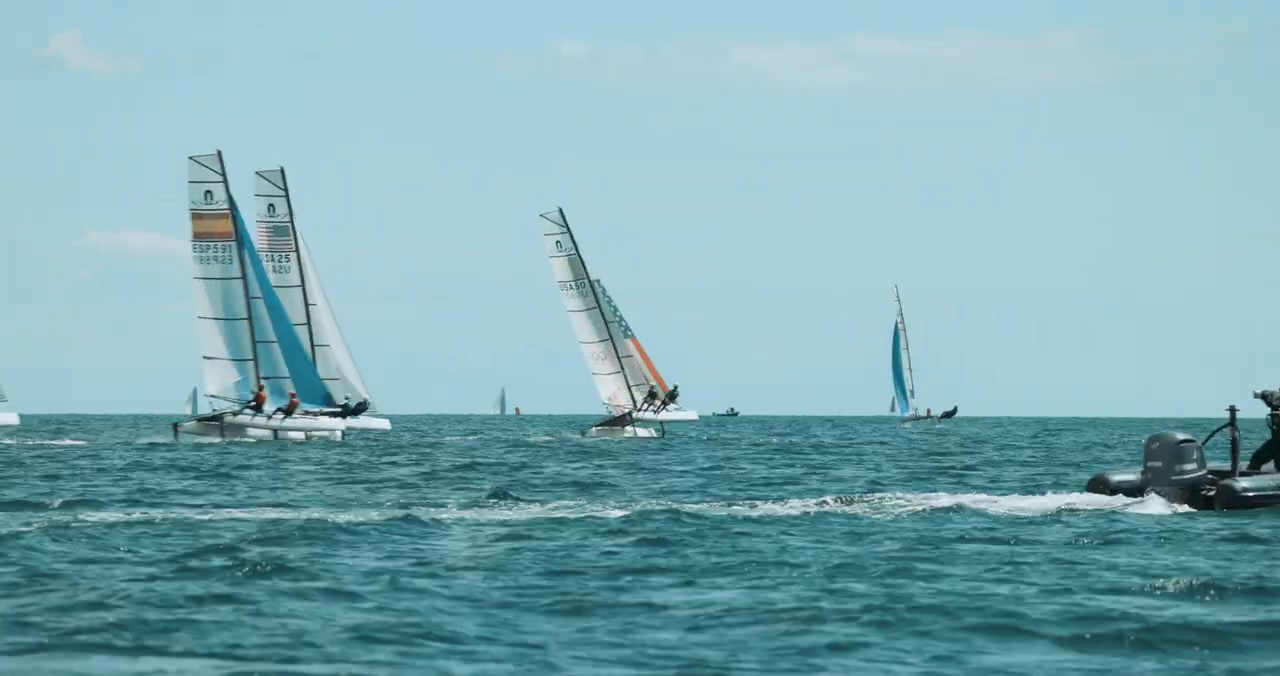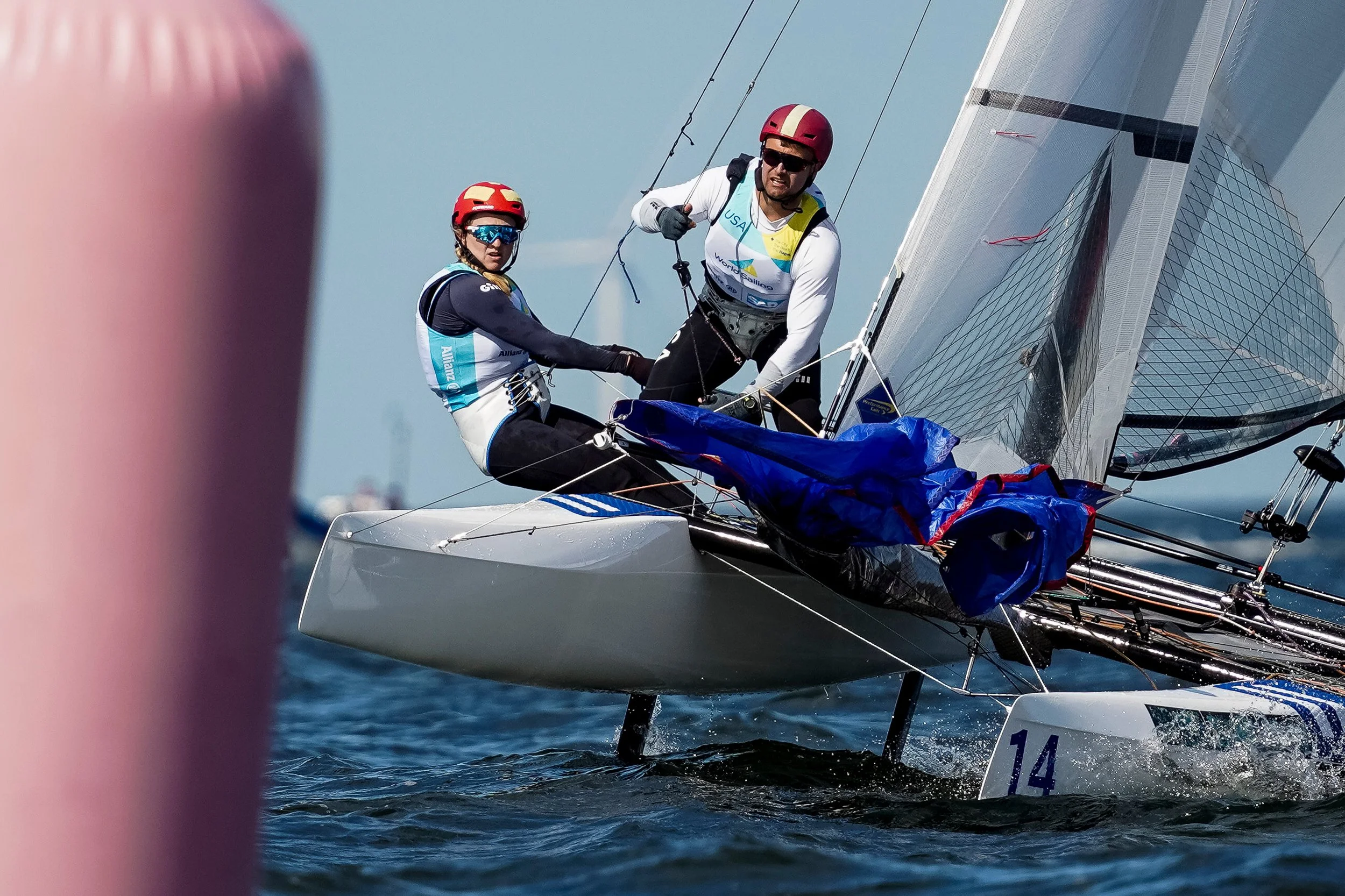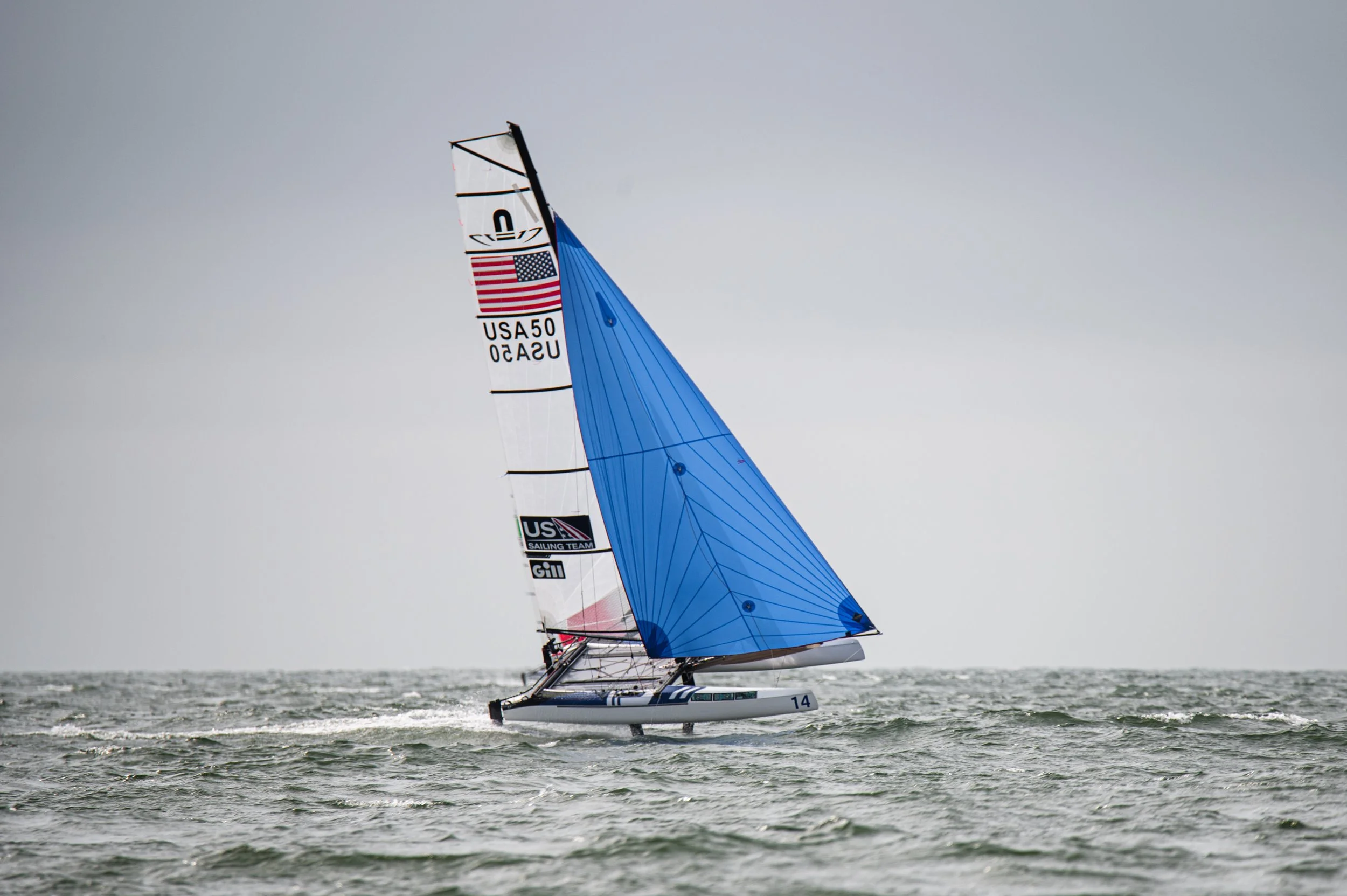
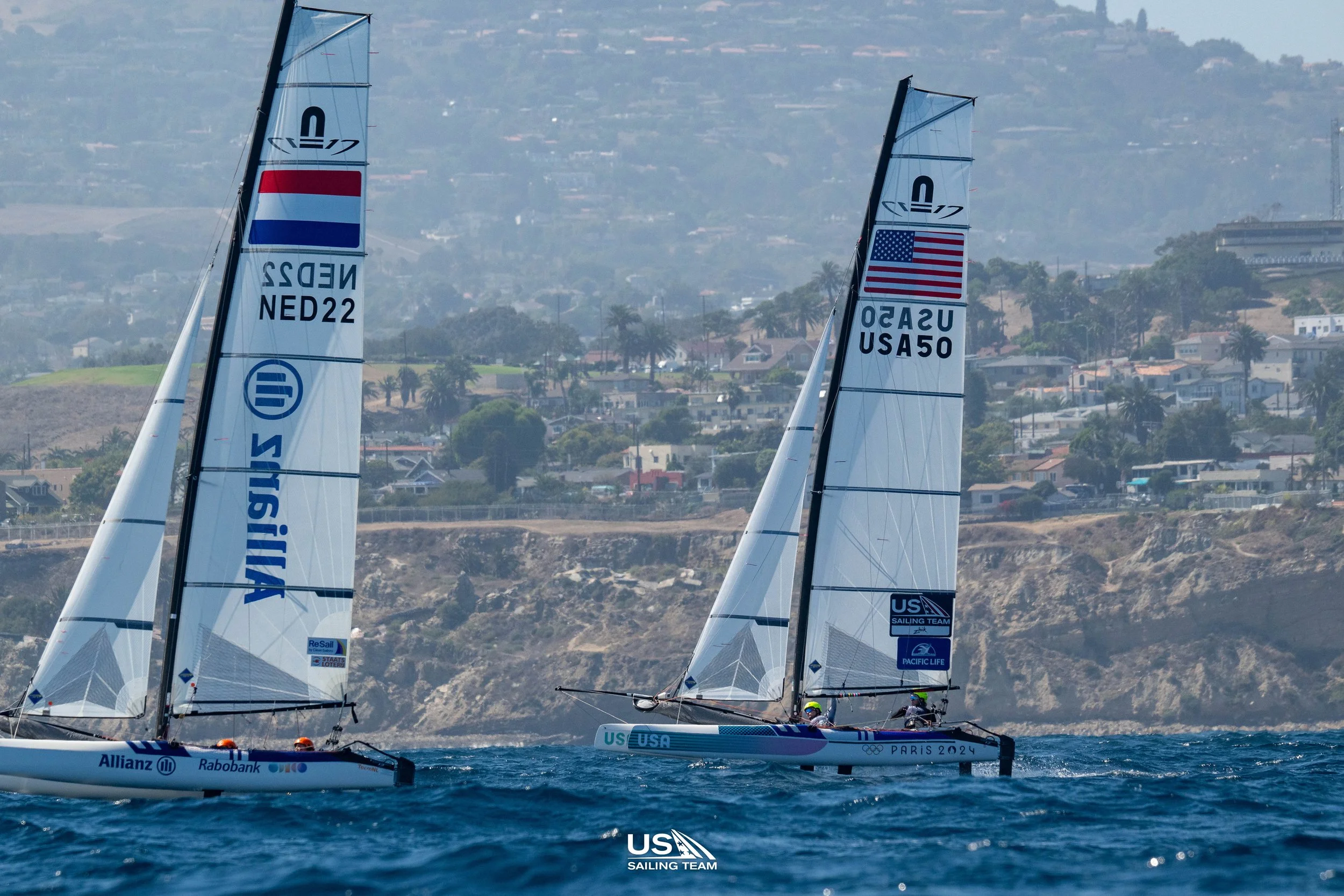
San Pedro OCR - Testing out the 2028 Olympic Games Venue

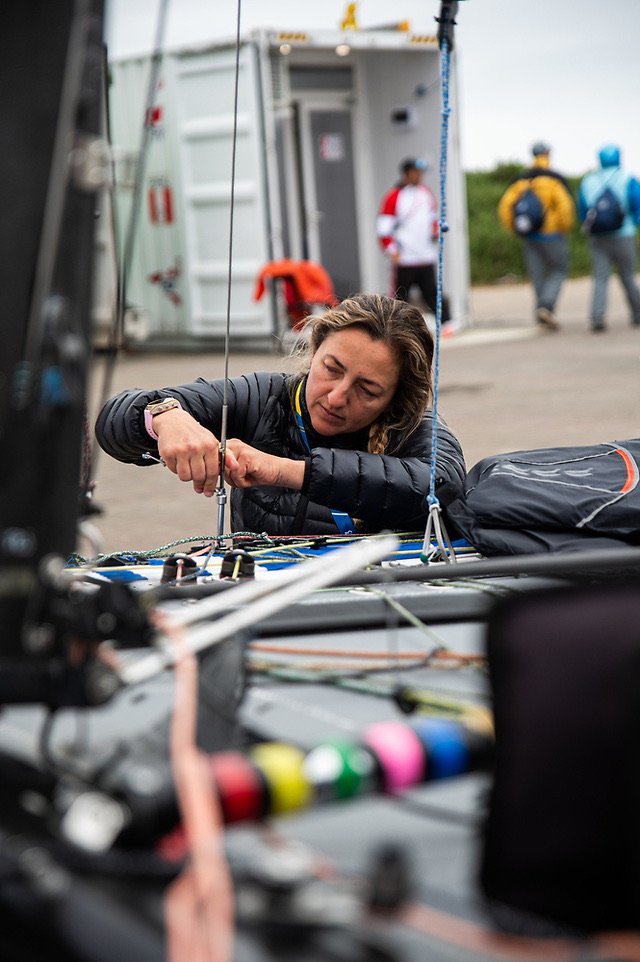
There is a moment in a new sailing partnership when you stop simply learning how to sail the boat together and start learning how to make the boat fast.

For Hoel and me, San Pedro was that moment.

We became a full-time team in late June, immediately after Hoel graduated from UCLA. Before then, we had been fitting in as many sailing days as we possibly could around his school schedule. Those days were valuable, but they were sporadic. Sometimes we had coaching, sometimes we did not. Often, the skills we were working on were still very fundamental.

Before the World Championship in May, for example, four consecutive training days felt significant. At that stage, we were still working on things as basic as how to tack the boat together or how to accelerate efficiently. We were building the operating system of a new team.

It was enough to get us onto the racecourse.

At Worlds, Kiel Week, and the European Championship, we could race with the international fleet and begin observing, in a much more informed way, where the gaps were between us and the best teams in the world. Those events gave us an enormous amount of information. We could look at the boats around us and start asking better questions. Where were they consistently faster? What were they doing differently? Which differences were equipment-related, which were technique, and which were simply the product of thousands more repetitions together?

But knowing what you need to improve and actually having the time to improve it are very different things.

Our First Real Training Camp

San Pedro was the first time Hoel and I had the opportunity to complete a proper training camp as a full-time team.

We had eight or nine concentrated training days before racing began. For the first time, instead of using our training time to establish basic crew work, we could identify a specific performance problem, work on it deliberately, assess the change, and then go back out and work on it again.

That changed everything.

Our coaches noticed it too. At the end of the block, one of them pointed out how much our pace had changed and how frequently we were arriving at the top of the course immediately behind boats we wanted to be racing against. The gap was still there, but it was small enough to see clearly.

Hoel made a similar observation in our final debrief. There were teams we had barely seen on the racecourse earlier in the season who were suddenly around us over and over again. We were rounding marks near them. We were crossing them. We were starting alongside them and, increasingly, staying in the race with them.

That was probably the most meaningful result of San Pedro for me.

Not because we suddenly believed we had arrived. We haven't. There is an enormous amount of work ahead of us.

It was meaningful because it gave us our first real data point for what happens when this team gets concentrated training time.

Learning to Look at Performance Differently

At this stage of our campaign, our goals are overwhelmingly skills-based.

Of course results matter. We race sailboats, and ultimately the objective is to beat the boats around us. We were proud to be the top U.S. Sailing Team Nacra 17 at San Pedro, and particularly proud of a top-five race finish in an extremely competitive international fleet.

But a finishing position alone tells us surprisingly little about what we need to do tomorrow.

The questions we are asking right now are much more specific.

How does our speed compare at different points of sail? Are we able to hold a lane against the best boats? Are we losing meters because of a decision, or because of pace? How consistently can we reproduce a technique? How does the boat look compared with the boats at the front? Are we creating the same shapes and profiles? Can we execute a skill when we're alone in training, and can we still execute it when there are 20 boats around us and we have to make tactical decisions at the same time?

San Pedro was an exceptionally useful venue for answering those questions because there was very little opportunity to hide.

Our coaches described it as a place where speed differences become extremely obvious. In some venues, good tactics can compensate for a speed deficit. In San Pedro, there were long stretches where the race became much closer to a drag race. If another boat was faster, you found out.

That made the week incredibly productive.

We also began separating two things that can look identical on a results sheet: having a skill and being able to execute that skill under pressure.

There were times in controlled training when we could line up, accelerate, and sail the boat very well. Add a starting sequence, another boat on our hip, tactical decisions, changing conditions, and the quality could deteriorate.

That isn't a mystery or a failure. It is simply the next layer of skill development.

The goal now is repetition.

Good Decisions Come From Good Information

One of my favorite moments from San Pedro actually happened before a race started.

Hoel and I have been trying to build a culture around preparation. We want to be early. We want to be organized. We want our equipment ready. We want enough time on the water to understand what is happening rather than reacting to it once racing begins.

On one race day, we launched early and spent considerably more time than most of the fleet sailing the course and gathering information before the first start.

Our coach pointed it out afterward. His takeaway was simple: good decisions come from good information.

That idea has stuck with me.

Professionalism in an Olympic campaign is often less glamorous than people imagine. It is showing up on time. It is launching early. It is maintaining equipment. It is taking useful notes. It is reviewing video when you're tired. It is asking the right questions. It is being respectful of coaches and training partners. It is eliminating distractions so that the limited hours available for improvement actually produce improvement.

Hoel and I are very different people in some ways, but this is one of the places where I feel incredibly fortunate in the partnership we have found.

We approach learning similarly.

We both want to understand why something is happening. We are comfortable being wrong. We can change our minds when the evidence changes. We can have detailed conversations without taking disagreement personally. Most importantly, when we identify a weakness, neither of us has much interest in protecting our ego from it. We want to work on it.

Our coaches specifically highlighted that growth mindset during the San Pedro block. They saw a team constantly asking how we could get better and encouraged us to combine that analytical approach with an increasing willingness to put ourselves into uncomfortable situations on the racecourse.

That is something we are actively working on.

Coming Back

There is another part of this campaign that is easy for me to normalize because I am living it, but occasionally I remember how unusual the timeline has been.

I competed at the Paris Olympic Games in 2024. I then stepped away from competition in 2025 to have my second child, a baby boy.

I was back in the gym about four weeks after giving birth.

At approximately four months postpartum, I was back on the water and beginning the process of interviewing and sailing with potential partners for the next Olympic campaign.

There was no guarantee that I would find the right person.

A Nacra 17 partnership is an unusual relationship. You spend enormous amounts of time together, often under stress, in an environment where small communication problems become performance problems very quickly. Finding someone with the physical skills to do the job is only one part of it. You also need compatible ambitions, work ethic, communication, temperament, logistics, and approaches to learning.

Finding Hoel has made me feel extraordinarily fortunate.

We are still a very new team. That is not something we are trying to disguise. In many ways, it is what makes this stage so exciting.

We can see how much we don't know yet.

We can also see how quickly we are learning it.

The Most Encouraging Metric

The metric I left San Pedro thinking about most was not our overall finishing position.

It was our rate of conversion.

When we identify a skill gap and get the opportunity to work on it properly, it tends to show up in our sailing very quickly.

Sometimes within days.

That happened repeatedly in San Pedro. We would identify something that was costing us performance, isolate it in training, make changes, and then find ourselves in a meaningfully different position relative to the fleet.

By the end of the block, Hoel described it as finally getting better at things we had been really bad at, while simultaneously discovering the next set of things we could become good at.

That is high-performance sport in a sentence.

You solve one problem well enough to expose the next one.

The encouraging part is that eight or nine days is not very much time.

Until San Pedro, we had never had a proper training camp together as a full-time team. Yet that short block was enough to noticeably change which boats we could race against and how long we could stay with them.

Our next phase looks very different.

We are moving into the off-season with the opportunity for weeks and months of concentrated training, including significant time with excellent coaching. Instead of squeezing sailing days between school commitments, international events, and travel, we can begin building the volume that established teams already have.

One of our coaches made an important point during the event: the teams at the front have spent enormous amounts of time training these specific skills. They have done hours and hours of straight-line work in conditions where we have simply not yet accumulated comparable volume.

There is no shortcut around that.

But for the first time, we now have the opportunity to start accumulating it.

What Comes Next

Our short-term goals are therefore very concrete.

We need more hours together. We need to make our best speed more repeatable. We need to expand the range of conditions in which we can execute our skills consistently. We need to keep developing our ability to sail the boat while simultaneously making good tactical decisions. And we need to continue deliberately putting ourselves into situations that are slightly outside our current comfort zone.

The long-term goal has not changed.

We want to become one of the teams consistently racing at the front of the international Nacra 17 fleet and put ourselves in a position to contend for Olympic selection.

But I don't think about that goal by trying to predict where we should finish at every regatta between now and then.

I think about the trajectory.

A few months ago, we were learning how to tack together.

Then we were learning how to get around an international racecourse together.

Then we were close enough to the fleet to begin accurately identifying the gaps.

Now we are beginning to close them.

San Pedro was the first opportunity we have had to see what happens when we take one of those gaps and give ourselves enough uninterrupted time to attack it properly.

The change after eight or nine days was palpable.

So as we look toward an off-season built around weeks and months of concentrated training, I am less interested in predicting exactly where that will put us than I am in continuing the process that is already working: identify the gap, understand it, train it, measure it, and repeat.

For a team this early in its development, that feels like a very exciting place to be.

The support we have received from the New York Yacht Club High Performance Fund has helped make this kind of training and international campaigning possible. It gives us access not simply to more regattas, but to the training time, coaching, equipment, and international benchmarking that allow those regattas to become genuinely productive development opportunities.

We are extremely grateful for that support.

And after San Pedro, we are also very excited to see what happens when we get to do this over and over again.

Follow the campaign: We are documenting the process, including the training, racing, travel, family life, and realities of building an Olympic campaign, on YouTube at @FoilingMama.
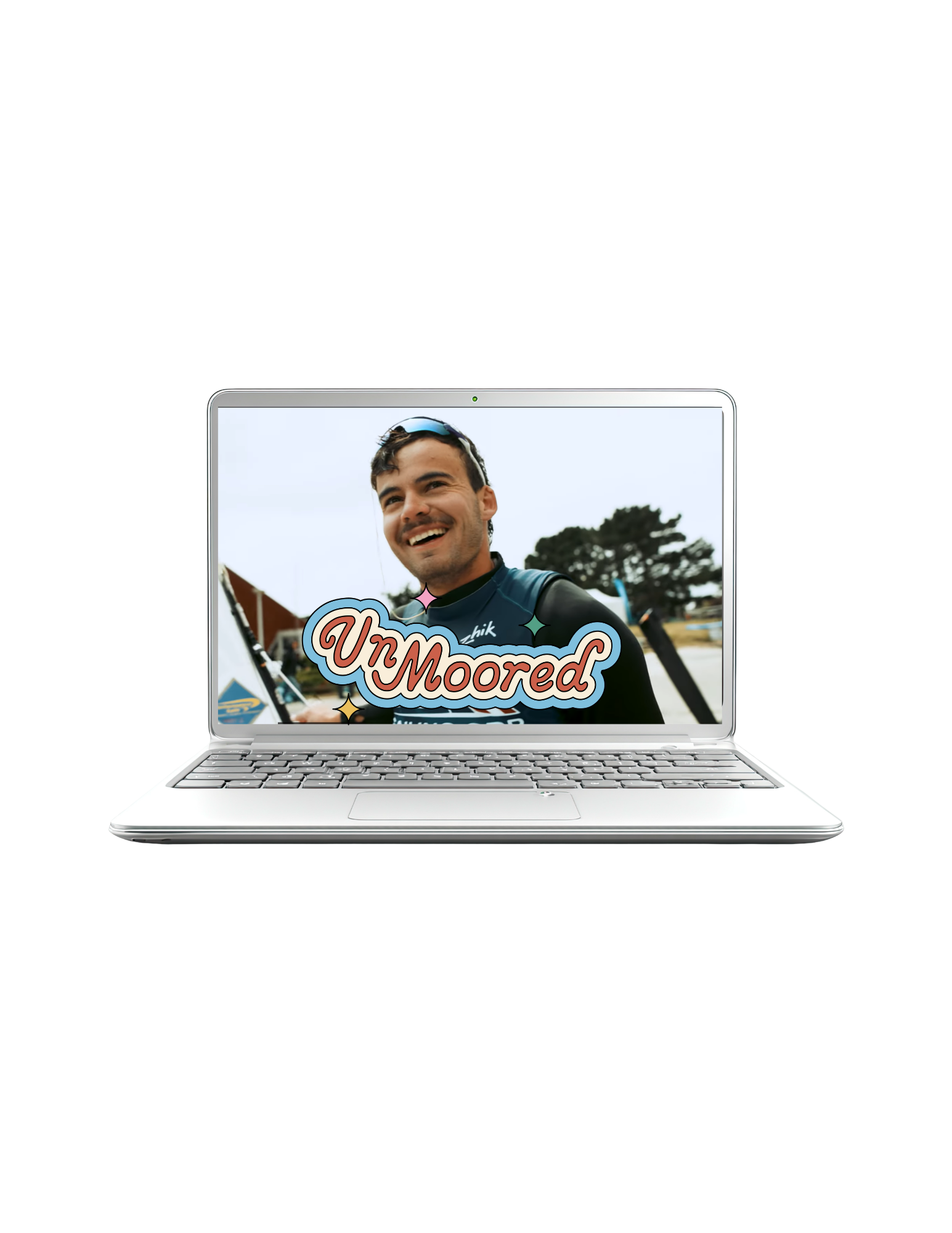
Episode 4 of Unmoored Youtube Series is LIVE!

What It Takes to Race at the Sailing World Championships

One of the things I wanted to show with Unmoored is what an Olympic campaign actually looks like when you’re living it, because most of what people see is the racing. You see the boats going fast, the big events, the results, and maybe eventually the Olympics. What you don’t see as much is everything that has to happen around those moments.

This episode takes you with us to the World Championships, which is obviously a big event in its own right, but for me it was also another chance to figure out where I am in this whole process of trying to come back to Olympic sailing.

Getting to the start line

There is so much that happens before you ever start racing. We’re preparing the boat, talking through things as a team, watching the conditions, thinking about what we need to do that day and trying to get ourselves physically and mentally ready to race.

And because this is sailing, you can do all of that and then… wait.

You spend so much time preparing to be completely ready at a very specific moment, while also knowing that the wind may have other ideas. I think that’s one of the funny things about this sport. It requires you to be incredibly switched on, but also incredibly patient.

Eventually, though, you get the signal, get out on the water, and all of the preparation turns into racing.

Racing at a World Championship

There’s nothing like racing at this level. You’re on the same course as some of the best sailors in the world, in boats where things happen very quickly, and small decisions can have a huge impact on your race.

It’s also a pretty effective way to find out exactly where you stand.

You can train and prepare and have a sense of how things are going, but a World Championship gives you a very honest answer. There are things we’re doing well, things that clearly still need work, and moments where I’m reminded of just how high the level is.

For me, that’s particularly interesting right now because I’m not approaching these events as someone who has already decided exactly what the next several years will look like. I’m still figuring out what another Olympic campaign means for me and whether this is something I want to keep pursuing. Racing at Worlds is part of getting that answer.

The part you don’t usually see

The other thing I wanted to show in this episode is how physical all of this is.

High-performance sailing is hard on your body, and getting off the water at the end of the day doesn’t mean you’re done. You still have to recover well enough to come back and do it again the next morning. That means treatment, food, sleep, and generally trying to take care of a body that you’ve just spent hours beating up.

It isn’t necessarily the part of an Olympic campaign that makes the highlight reel, but it’s a huge part of being able to do this day after day.

I think that’s becoming one of my favorite things about making Unmoored. I get to show the parts that would normally be edited out of the story.

An Olympic campaign can sound very glamorous when you reduce it to the big moments: World Championships, international travel, representing the USA, hopefully an Olympic Games at the end of it. The day-to-day version is a lot less tidy. There’s waiting around, troubleshooting, being tired, taking care of your body, trying things that don’t work, talking through mistakes and then getting up the next day and trying again.

And I actually think that version is more interesting.

So, what did Worlds tell me?

I’m still figuring that out.

Obviously results matter, and we came here wanting to race well. But at this point in my life, I’m paying attention to more than a finishing position. I’m paying attention to how my body feels, how we work together as a team, where I feel competitive, where we have work to do, and maybe most importantly, how I feel about being back in this environment at all.

I started Unmoored because I didn’t want to tell this story retrospectively, once I already knew how everything turned out. I wanted to document the part where I genuinely don’t know.

The World Championships were another piece of that.

I don’t have some grand conclusion yet about exactly where this road leads, and I think I’m becoming more comfortable with that. Right now I’m training, racing, getting stronger, learning a lot and seeing where it takes me.

That feels like enough of an answer for now.

Watch Unmoored: What It Takes to Race at the World Championships on Foiling Mama on YouTube.

Episode 3 of Unmoored is LIVE!

There’s a strange thing about trying to make an Olympic team when you’re also a mom: the enormous and the completely ordinary have to exist side by side.

One minute, I’m thinking about what it actually takes to get back to the Olympics—qualification events, training, all the steps between here and there.

The next, I’m doing school drop-off.

That’s the reality of this season of my life, and Episode 3 of Unmoored probably captures that collision better than anything I could have planned.

The road back isn't one big decision

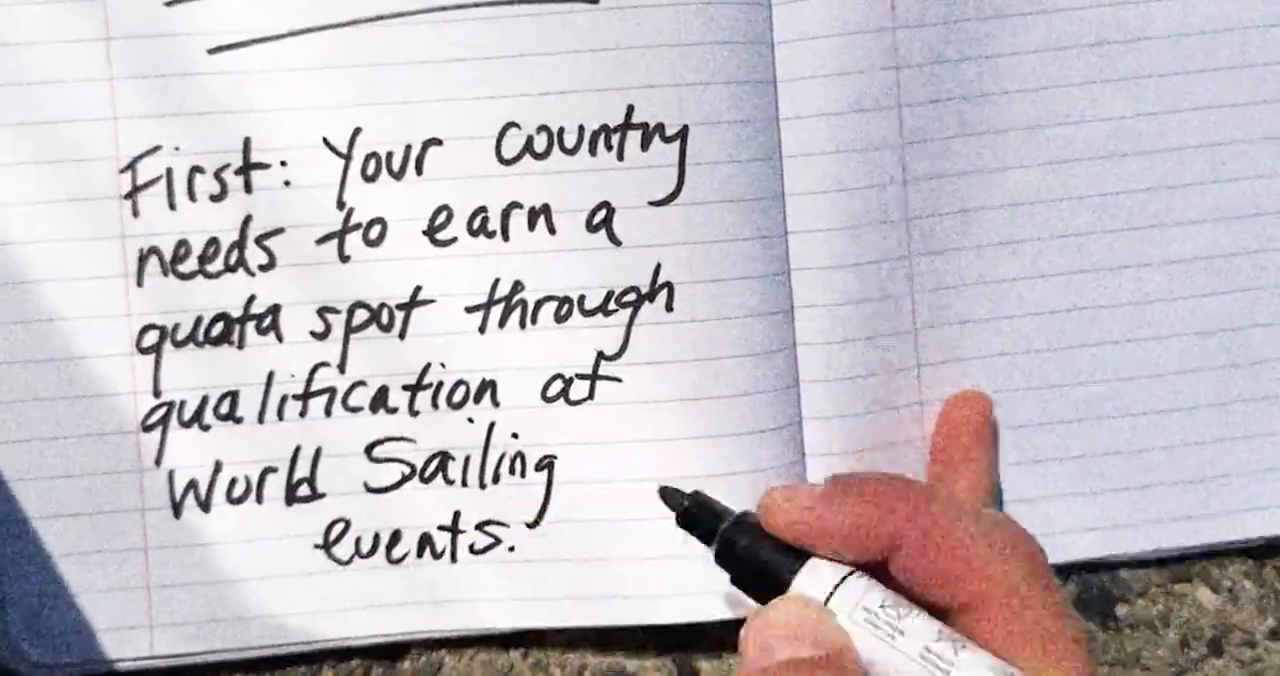
The Olympics can look like a single destination from the outside. But when you actually write down the path to get there, it becomes a series of very specific steps.

First, your country has to earn a quota spot through World Sailing qualification events. Then there are the steps that determine who ultimately gets to fill that spot.

There’s something both daunting and clarifying about seeing it on paper.

I don't get to wake up one morning and decide I'm going to another Olympics. I get to decide whether I'm willing to take the next step toward one.

And then the one after that.

A tattoo, because apparently this is where we are

This episode also includes a tattoo—which feels appropriate for Unmoored.

There is something very permanent about putting a mark on your body in the middle of a period of life that feels anything but permanent.

So much of this project has been about identity: the athlete I was, the mother I am, and the person somewhere in between who is still figuring out what she wants.

Maybe that's part of why this moment belongs here.

Not because a tattoo answers any of those questions.

But because sometimes choosing something for yourself—something that is simply yours—matters.

And then it's time for school drop-off

This may be my favorite contrast in the episode.

There is no dramatic transition between pursuing an Olympic dream and being somebody's mom.

You just do both.

You think about qualification and training and what your body needs to be capable of, and then you get in the car. You walk down the sidewalk. You do drop-off. You move through the ordinary rhythms of your family's life.

Then you go train.

In some ways, motherhood makes pursuing something this big more complicated. There are more logistics, more people to consider, and a life that doesn't stop just because I have an ambitious goal.

But it also gives the whole thing perspective.

The Olympics can feel enormous. School drop-off has a way of reminding you that it's also just one part of a much bigger life.

Getting strong enough for what's next

And then there's the work.

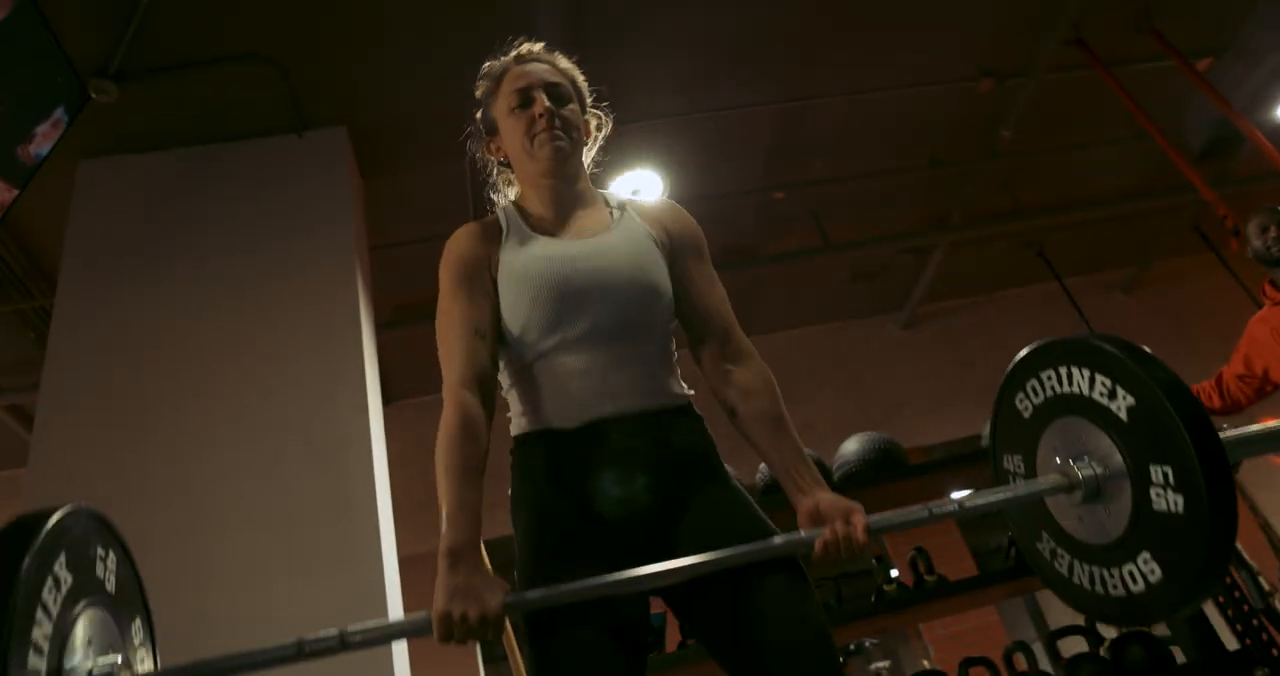
The gym isn't particularly romantic. There are weights to lift, repetitions to finish, and a body that has to become strong enough to do what I'm asking of it.

That's another part of being unmoored that I'm beginning to understand.

Not knowing exactly where this ends doesn't mean standing still.

I can train.

I can get stronger.

I can take the next step.

I can be a mom.

And I can see what happens.

Maybe that's what this road back looks like right now—not a dramatic declaration that I'm going to the Olympics, but a collection of very ordinary days in which I keep choosing to move toward something.

School drop-offs and tattoos.

Weights and qualification events.

Motherhood and ambition.

All of it happening at the same time.

And for now, that's enough.

Watch Episode 3 of Unmoored: “School Drop-Offs and the Road to the Olympics” on Foiling Mama.

Watch Unmoored Series on YouTube!

UnMoored: The Road to LA 2028

April 15, 2026

Today I’m excited to share UnMoored, a new YouTube series following my journey toward the Los Angeles 2028 Olympic Games.

After representing Team USA at the Paris 2024 Olympics, I knew I wanted to keep going. But I also knew I wanted to tell this chapter differently.

Olympic sport is about performing at the highest level. Period. But the performer is also a parent, a partner, a teammate, and a human. UnMoored explores that side of the journey.

The series goes behind the results and highlight reels to show what building another Olympic campaign actually looks like: finding the right teammate, training and racing one of the fastest and most technical boats in Olympic sailing, making difficult decisions, raising a family, and continuing to chase an enormous goal when the path forward isn't always clear.

The early episodes begin with the search for my new Nacra 17 crew and the start of my partnership with Hoel Menard. From there, UnMoored follows the journey itself—the training, racing, relationships, setbacks, progress, and everything between here and LA 2028.

Director and cinematographer Dane Wilson has brought an incredible perspective to the project, combining cinematic foiling footage with the quieter, less visible moments that are usually left outside the frame.

This isn't a series about having everything figured out.

It's about what happens while you're figuring it out.

Watch UnMoored on YouTube

And if you want to follow the campaign as it unfolds, you can also find me on Instagram and learn more about my Olympic journey through Team USA.

See you out there.

Sarah

Kiel Week 2026

Kiel Week: Learning, Progress, and a Strong Finish

Kiel Week gave us a little bit of everything: waiting, challenging racing, frustrating moments, and—finally—a breakthrough.

The regatta began with no racing because there wasn’t enough wind. Once we got on the water, the conditions remained light and tricky. We saw some encouraging signs early, including competitive speed, improving starts, strong mark roundings, and gains downwind.

The middle of the regatta was more difficult. We struggled to find a consistent rhythm, and the boat didn’t always feel as settled as we wanted. Still, we stayed calm, communicated well, and kept working through each challenge together.

On the final day, things started to click. We felt more confident in the boat and could focus more on racing the fleet. Even when we made mistakes, we stayed composed and fought our way back, gaining several places late in the races.

Our biggest takeaway from Kiel is that progress is rarely a straight line. Every day gave us something valuable, and we finished the week with more confidence, better communication, and a stronger foundation for what comes next.

Thank you to everyone following and supporting USA 50 Racing!

Stay connected:

Worlds 2026!

2026 Nacra 17 World Championships: Our Trial by Fire

Quiberon, France | May 2026

Hoel and I went into the 2026 Nacra 17 World Championships in Quiberon, France, with a goal of finishing in the top 20. We finished 25th, and while we would have loved to hit that goal, the context is pretty important: when we lined up for the first race of Worlds, we had spent fewer than 30 days in the boat together and had done zero formal training as a team.

Hoel hadn't even graduated from UCLA yet. We were essentially doing this by the seat of our pants—getting whatever days together we could, figuring out logistics, learning each other as teammates and trying to get our new campaign moving while he was still finishing school.

So naturally, we decided to start by throwing ourselves into the most competitive event of the year.

It was a bit of a trial by fire, but that was also the point.

Learning What It Takes to Be a Top Nacra 17 Team

We could have spent months training on our own before putting ourselves on a starting line like this, but there was something incredibly valuable about going straight to Worlds. We wanted to see where the fleet was, understand what the best Nacra 17 teams in the world were doing and get an honest look at the work ahead of us.

Worlds gave us exactly that.

When you're racing against the best teams in the world, there isn't much room to hide. We got to see where our speed was competitive, where we were losing, which parts of our boat handling needed attention and how the established teams were operating around the racecourse. More importantly, Hoel and I got to start figuring out how we operate together when everything is happening quickly and the pressure is on.

For a team that had spent less than a month together in the boat, that experience was incredibly valuable.

Building Our Partnership

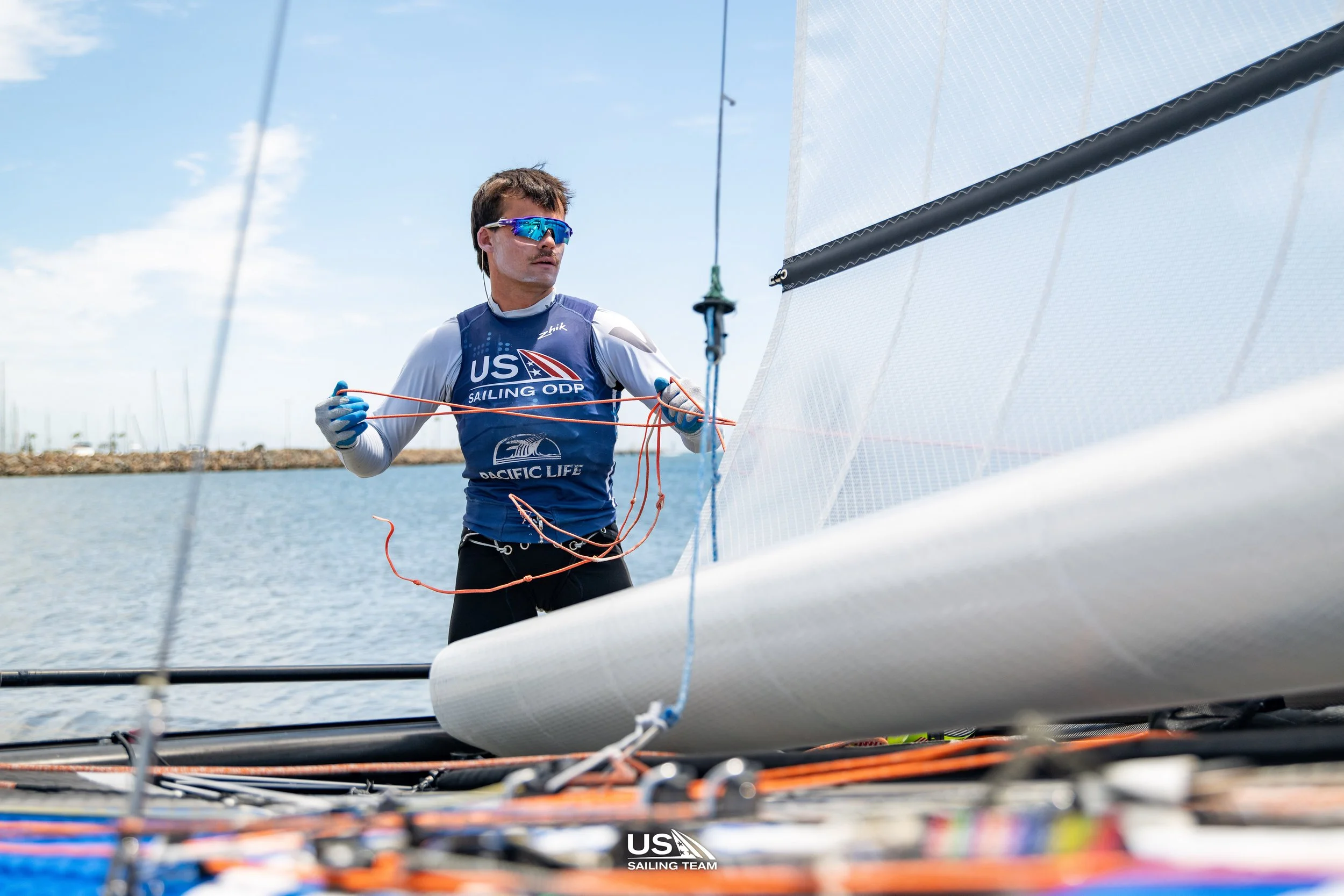
Hoel and I came into this campaign from very different places. I went to the Paris 2024 Olympic Games, while Hoel is at the beginning of his Olympic sailing career and was still a student at UCLA when we started this campaign. We're learning how to combine those different experiences and strengths while also learning each other as teammates.

The Nacra 17 doesn't give you much time to ease into that process. It's an incredibly fast and technical boat, and so much depends on two people being completely in sync. Communication, timing, boat handling, settings and decision-making all affect each other, and the only real way to develop those things is to spend time together in the boat.

We didn't have much of that time before Worlds, so instead we got an accelerated education.

There were certainly moments in Quiberon where our lack of time together showed, but there were also moments that made us really excited about what we're building. We came away with a much clearer understanding of where the top of the fleet is, where we are relative to it and, most importantly, what we need to work on if we want to become one of those teams.

Proud of Where We Started

Of course we wanted a better number on the results sheet. We're competitive people, and we're doing this because we want to become one of the best teams in the world.

But looking back at what we actually asked of ourselves—showing up at a World Championship with fewer than 30 days together and no formal training—I am incredibly proud of our team.

We didn't wait until everything was organized or until we felt completely ready. We got ourselves there, put the boat on the starting line and started learning.

Now we have a benchmark. We've seen firsthand what the best teams in the world are doing, and we have a much better understanding of the speed, consistency, communication and technical execution it will take to compete with them. Instead of guessing about what we need to become, we got to measure ourselves against it.

That's a pretty exciting place to begin.

Worlds wasn't a culmination of our training. It was the beginning of it. And we left Quiberon proud of what we had managed to put together in such a short amount of time, excited about our partnership and very motivated by everything we now know we can improve.

We have a lot of work ahead of us, and that's exactly what we came here for.

Follow Our Road to LA 2028

We're documenting this campaign through UnMoored, our YouTube series following the sailing, training, relationships and life behind our push toward the LA 2028 Olympic Games.

Watch UnMoored on YouTube

Follow UnMoored on Instagram

Follow Sarah on Instagram

See our Nacra 17 team profile and results

LA 2028 Here we come!

LA 2028 Here we come!

The campaign toward Los Angeles 2028 is officially on—and I couldn’t be more fired up.

After a yearlong search for a teammate, I’m incredibly excited to welcome Bay Area native Hoel Menard…

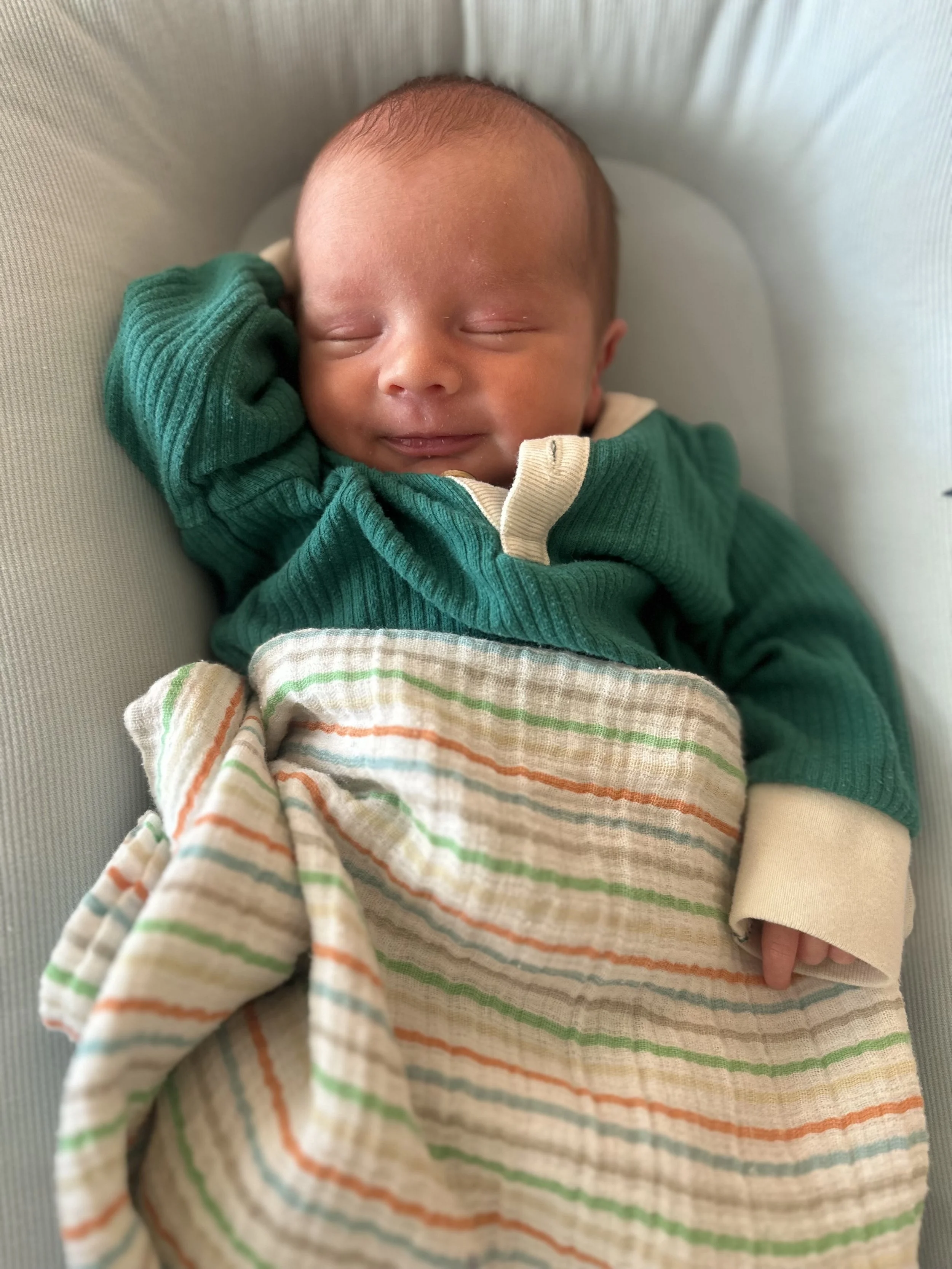
Welcome Rocky Moon Moore!

Welcome Rocky Moon Moore!

Rocky Moon Moore made his surprise debut on June 23rd in Erie, PA—6 pounds even, 6 weeks early, and very far from our home in Miami…

Special Edition 2024 Olympic Games T-Shirt Emmett Moore x BuiltMore Projects

If you want a special edition, hand silkscreened tee to commemorate USA 50 racing in the 2024 Games, look no further. These limited edition shirts are made to order in Miami…

Design by Emmett Moore & BuiltMore Projects
Hand Silkscreened in Miami, FL
6.1 oz./yd² (US), 10 oz/L yd (CA), 100% ringspun cotton
Garment dyed for that lived-in feel and almost no shrinkage at home
Soft ring-spun cotton fabric
Relaxed fit

Ships in 10 days

Get daily updates by following Sarah and USA 50 Racing on instagram

The countdown to the Games is on! We are less than two weeks away from the Opening Ceremony, and just under three weeks from the start of the first race for the Nacra 17. If you want to get daily updates please head over to instagram and follow @sarahnewberrymoore and @usa50racing. We are happy to share that we have an ace of a social media manager taking over our accounts for Games time, and she has a treasure trove of content, a direct contact on site, and is privileged to the best and newest images and content available. You won’t want to miss these updates, so be sure to follow!

Purchase USA 50 Racing Tear Gear!

USA 50 Racing Team gear is ready to rock n’ roll! Click on the link to purchase your very own team kit from our website. In the shop you can find “Strawberry and Love Mountain” hats, t-shirts, toddler shirts, and stickers. We also have our classic USA 50 logo sticker for sale, as well as some incredible coffee cups (both enamelware and ceramic).

How to Follow the 2024 Olympic Games

How to Follow the 2024 Olympic Games

We have everything you need to follow sailing at the 2024 Olympic Games right at this link. You don’t need any other resource.

From the US Sailing Page: “US Sailing has confirmed the names of the 13 sailors representing the United States at the Paris Olympic Games this coming July and August in Marseille, France. The team hails from seven U.S. states and territories including California, Florida, Illinois, Minnesota, New York, Rhode Island, the U.S. Virgin Islands, and Wisconsin. 

“We’re very proud to bring this group of 13 to Marseille this summer,” said Marcus Lynch, High-Performance Director. “It’s been an inspiring, impressive Trials season with a deep lineup of talented athletes across all disciplines who have fought hard to represent the US on the Olympic stage. With our roster now finalized, the Team is dialed in on fine-tuning skills to perform at their best.” Read more about the team here.

The 2024 Olympic Games will be held from July 26 to August 11, 2024.

The Sailing events for the 2024 Olympic Games will be held in Marseille, France, a Mediterranean port city in southern France. Marseille, renowned for its sailing conditions, is one of the most iconic international sailing venues. The newly designed Roucas Blanc Marina will host all sailing events.

Sailing in Marseille, offers a unique and challenging environment for competitors. As the oldest city in France, Marseille is known for its rich maritime history and iconic waterfront. The sailing conditions in Marseille are varied, with strong Mistral winds and the potential for both calm and choppy seas, providing a rigorous test for sailors. The city hosted several significant sailing events, making it a well-prepared venue for the Olympic sailing competitions.”

Final Push to the 2024 Olympic Games

The @ycprmarseille Magic Regatta has just wrapped up, concluding our final warm-up event before the Olympic Games!!🙌 We are feeling proud of our hard work. We are so fired up to be on the Olympic start line in this amazing fleet.

I am unbelievably excited to use my platform during the Games to share our story and give you a front row seat to all the action!!💥 I’ll be working closely with friends, family, and a special Instagram wizard to provide all of the Olympic content you could possibly need 🧚🇺🇸✨

Keep messaging. Keep cheering. Keep following along. The support is fuel to the fire, and I can’t wait to reconnect with everyone once the Games are complete. Let’s do this. 🍓⛰️💪🌬️🇺🇸💥

We Won the Olympic Trials!

We Won the Olympic Trials!

From US Sailing: “🚨SARAH NEWBERRY MOORE & DAVID LIEBENBERG have won Nacra 17 selection early and will go on to represent the United States at the Paris 2024 Olympics this summer🚨 Today wrapped the qualifying series where the top 25 advance to finals at the Nacra 17 World Championships in La Grande Motte, France. Because of their advancement to the top 25, Sarah and David are guaranteed enough points between them and Carson / Lindsay to secure early qualification for Paris.”

From Sarah: “I’ve been off instagram since our Olympic Trials started last month. Now I can say we’ve accomplished the goal so I’m back to deliver the good news!

Future Olympians. We’ve been working a long time for this and it’s an unreal feeling. Thanks to our team on the ground: Tom Zajac, Angela Popiol, Tim Herzog. Thanks to our team at home (who logged so many hours abroad to make this happen) starting with Emmett Moore and Julia Paxton, our partners and sometimes coaches. Thank you to our parents, who helped plant the seeds for this dream… and provided the support (and maybe genes) we needed to become determined enough individuals to be able to reach it. Thank you to my in-laws, who have had my back through thick and thin over the last three years of campaigning. Thank you to my uncle Jamie for teaching me to love catamaran sailing. Thank you to my Aunt Michele and to David’s Aunt Irene for being major donors to our campaign whenever we needed it most! Thank you to Bobby and Jojo, who kept us on track when we knew we could do this… we just didn’t know how!

Thank you to @primedadrienne for your constant support from afar 💗 and to @frankietelfort and @oldbullathletics for all the quality training.

I hope I can convey to the family and friends who provided love, support, childcare, funding, advice… just how valued and appreciated you are. This win is yours too.

Finally, thank you to all of our donors on the east and west coasts! Special thanks to Richmond Yacht Club Foundation who have gone above and beyond over the last 6 years to help us achieve this dream. Thank you to Skiff Sailing Foundation, St Francis Sailing Foundation, Sailing Foundation of New York, &Mother, and of course, the US Sailing Team.” I’ve been off instagram since our Olympic Trials started last month. Now I can say we’ve accomplished the goal so I’m back to deliver the good news!

Future Olympians. We’ve been working a long time for this and it’s an unreal feeling.

Thanks to our team on the ground: Tom Zajac, Angela Popiol, Tim Herzog. Thanks to our team at home (who logged so many hours abroad to make this happen) starting with Emmett Moore and Julia Paxton, our partners and sometimes coaches. Thank you to our parents, who helped plant the seeds for this dream… and provided the support (and maybe genes) we needed to become determined enough individuals to be able to reach it. Thank you to my in-laws, who have had my back through thick and thin over the last three years of campaigning. Thank you to my uncle Jamie for teaching me to love catamaran sailing. Thank you to my Aunt Michele and to David’s Aunt Irene for being major donors to our campaign whenever we needed it most! Thank you to Bobby and Jojo, who kept us on track when we knew we could do this… we just didn’t know how!

Thank you to @primedadrienne for your constant support from afar 💗 and to @frankietelfort and @oldbullathletics for all the quality training.

I hope I can convey to the family and friends who provided love, support, childcare, funding, advice… just how valued and appreciated you are. This win is yours too.

Finally, thank you to all of our donors on the east and west coasts! Special thanks to Richmond Yacht Club Foundation who have gone above and beyond over the last 6 years to help us achieve this dream. Thank you to Skiff Sailing Foundation, St Francis Sailing Foundation, Sailing Foundation of New York, &Mother, and of course, the US Sailing Team.”

How to Donate to the 2024 Campaign and Beyond...

Supporting Foundation Information: Please direct donations to any of the Foundations listed below

Richmond Yacht Club Foundation - The purpose of the Foundation is to foster amateur national and international yacht racing by assisting in the training and education of amateur sailors for participation in such competition.

Donation Mailing Address: Richmond Yacht Club,
351 Brickyard Cove Rd. Richmond, CA 94801
Check made out to: Richmond Yacht Club Foundation
Memo: “FBO Liebenberg Newberry Olympic”

—-

Skiff Sailing Foundation - The Skiff Sailing Foundation is a 501c3 publicly supported qualified amateur sports organization dedicated to the promotion and support of High Performance Sailing”

Donation mailing address: Skiff Sailing Foundation, 933 Polk St.
Albany, CA 94706
Check made out to: Skiff Sailing Foundation
Memo: “Nacra 17”

—-

The Sailing Foundation of New York - The Sailing Foundation of New York is a 501(c)3 organization dedicated to the support and growth of education, competition and sporting activities in the sailing community.

Donation Mailing Address: Sailing Foundation of New York,
PO Box 124 Rye, NY 10580
Check made out to: Sailing Foundation of New York
Memo: “Sarah Newberry Olympic Campaign”

The Story of Strawberry and Love Mountain...

The Story of Strawberry and Love Mountain...

The Strawberry Love Mountain story… USST Nacra 17 coach, @tomsailing, is a 2x Olympian in the Nacra for Austria and a Rio 2016 Bronze Medalist 🥉 who only recently transitioned from campaigning athlete to coach.

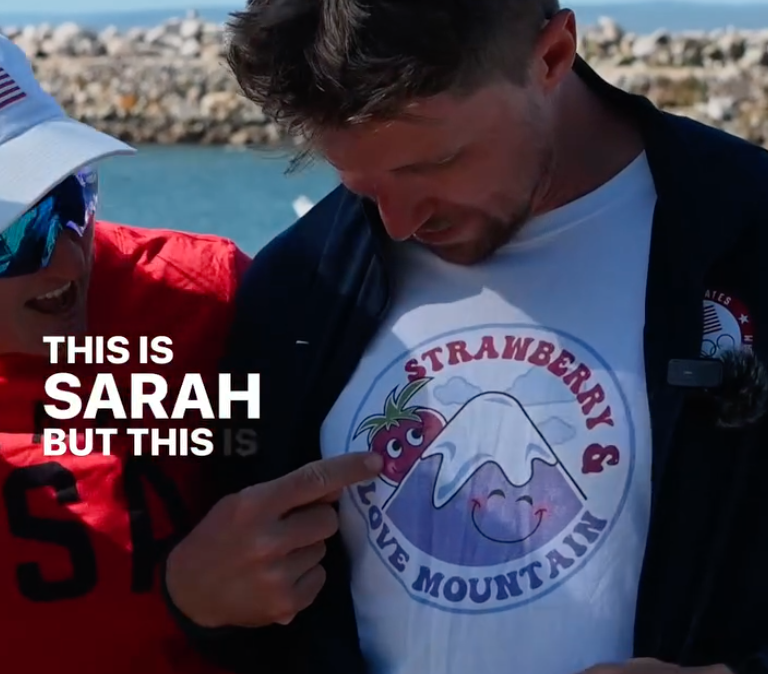
While on the circuit himself, he and other international Nacra sailors coined nicknames for Sarah and David: Sarah Newberry became “Strawberry” and Liebenberg translates directly to “Love Mountain” in German.

Last December we brought the nicknames to life in a design as a gift to @usa50racing and turned it into a small run of t-shirts and stickers. The stickers hang out on their gear box and on their mast and are a nice reminder of a funny inside joke, but now you’re in on the joke too 😉

UPDATE: t-shirts, baby gear, mugs, and stickers can be ordered right here on the website at this link: Team Gear

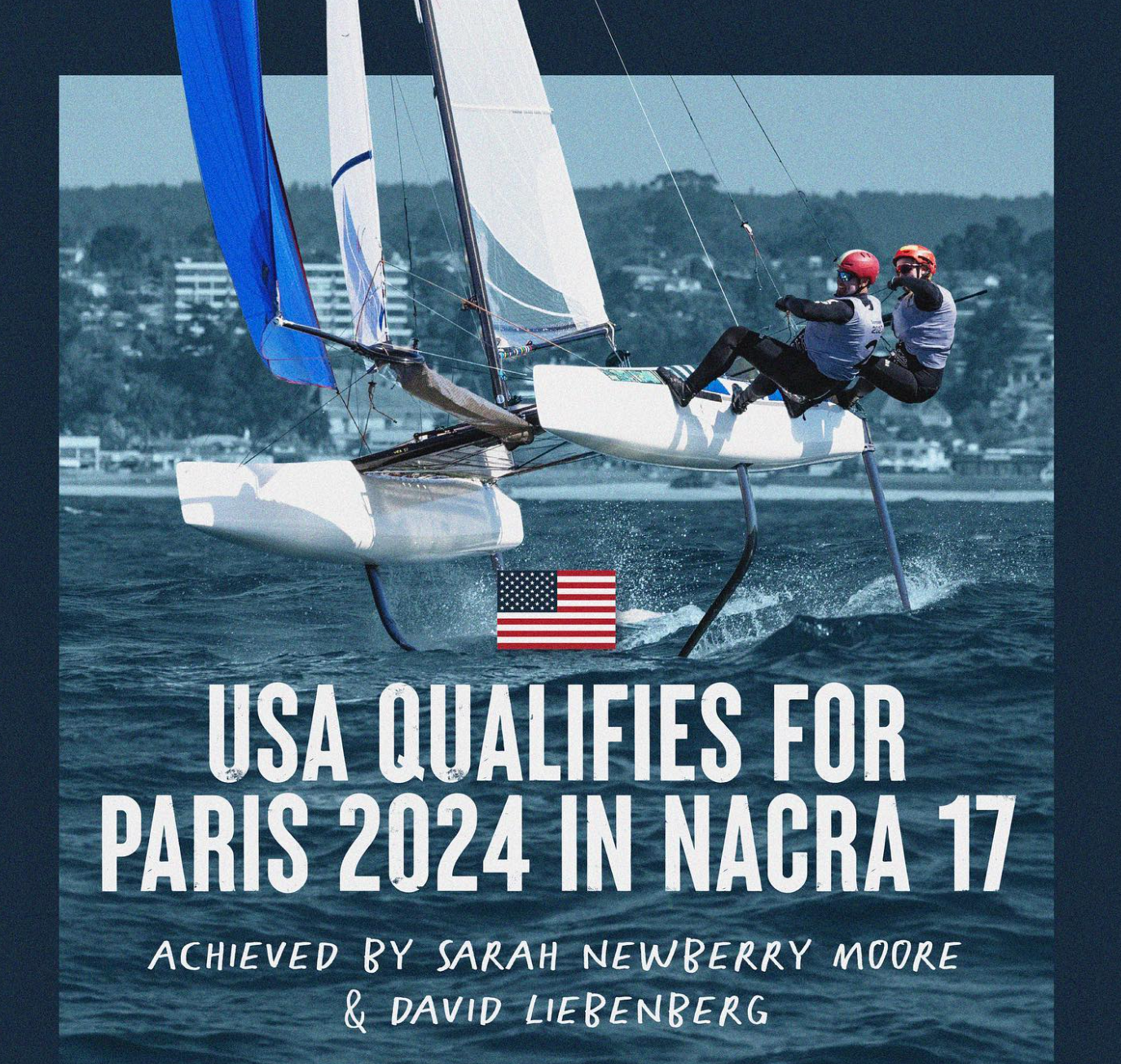
USA 50 Racing Qualifies the Country for the 2024 Olympic Games

USA 50 Racing Qualifies the Country for the 2024 Olympic Games

🇺🇸 Still with a Medal Race left to go, @usa50racing has secured a spot for USA at the @paris2024 Olympic Games in the Nacra 17 🇺🇸

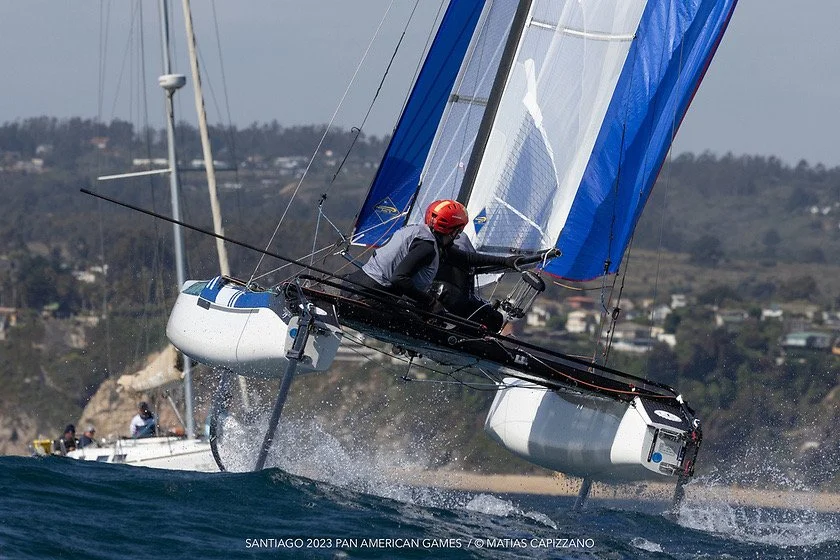
Sarah and David needed to finish as the top North American country at the Pan American Games this week to qualify the USA, and by putting enough points between themselves and Canada, they’ve gotten the job done with a day to spare.

Argentina is already guaranteed Gold on Saturday, so Sarah and David will battle for silver against the Brazilians 🥈

With country qualification complete, the top USA Nacra 17 team will get selected in 2024 to represent Team USA in Paris. Link in bio for selection details.

📸 @matias_capizzano @santiago2023oficial

The Multihull Mama in Sailing World Magazine

The Multihull Mama in Sailing World Magazine

By Michelle Slade

Sarah Newberry Moore’s son, Iren, just turned 2. Not only is he already wreaking havoc at the New York YC—scattering Goldfish crackers across the manicured lawn at Harbour Court and spilling his grandmother’s wine in the prestigious club library—but he’s also beginning to know his way around a Nacra 17 better than most adults.

Iren was, for all intents and purposes, born into the current Olympic quad, so it’s not surprising that he is quickly learning the ins and outs of elite sailboat racing, just as his mom and her sailing partner, David Liebenberg, have had to adapt to having a baby in the campaign mix. It’s an arrangement that is working out just fine.

“If you ask Iren what momma does, it’s ‘sailboat with Uncle Dave,’” Newberry Moore says with a smile. “Any time he sees a man with brown hair, he says, ‘Uncle Dave,’ and any man on a sailboat is Uncle Dave. Luckily, his dad looks very different. Dave has been showing him how to do boatwork, and he loves touching all of the parts of the boat and pulling on the lines.”… More at the link below

World Championship 2023

World Championship 2023

Worlds 2023!

After a tough qualifying series in which we struggled to find our pace, we battled out two really strong days of racing and posted some scores we are proud of. Our starts improved from racing in Marseille last month, as did our lane management and problem solving skills. This was the first big wave big current championship for us as a team and it definitely upped our level. We saw up to 2+ knots of current at times which made for some memorable moments (think offset mark floating down the race course with some serious speed)

Congratulations to our friends and training partners @majdalanibosco.sailing for cinching the win of their Olympic trials and Olympic slot at this event. We are so proud of you!

We walk away from this worlds one point behind the legend, @santilange , who has been an absolute honor to know and to race against. Grateful to share the racecourse with him at his last Olympic championship. Thank you Santi for being such an inspiration to all of us.

Now on to spend time at home with family, then some training in Marseille in September. In October we head to the Pan American Games in Santiago, Chile, where we will compete to earn a ticket to the Olympic Games for the USA!

One year to go to the Olympics. We are out here giving it our all, and taking both the wins and losses as fuel for the fire🔥